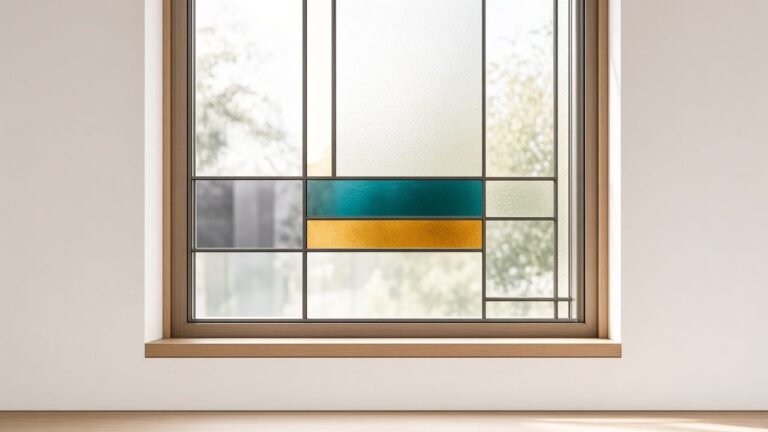
Few styles are as instantly recognisable as Art Deco. Sunbursts rising over a front door, stepped patterns in a hallway window, crisp chevrons in amber and textured clear glass: these were the hallmarks of Melbourne homes built between the wars. Today, Art Deco leadlights are among the most sought-after features in interwar houses and flats. Verity Leadlights has been repairing, restoring and reproducing them since 1979, and over the years we have collected original old leadlights and period glass so that our work blends seamlessly with yours.

Art Deco in Melbourne homes
Art Deco took hold in Melbourne from the late 1920s and peaked through the 1930s, continuing in simplified form into the 1940s. It shaped thousands of brick bungalows, villas and blocks of flats across the city. You will find Deco leadlight in bayside suburbs such as Elwood and St Kilda, famous for their interwar flats, and right across the middle-ring suburbs where interwar houses were built in large numbers, from the east to the north and west of the city.
Unlike the richly coloured Victorian and Federation styles that came before, Art Deco leadlight is about geometry, rhythm and light. It often sits alongside other Deco details in the house, such as curved brickwork, stepped chimneys, ornate plaster ceilings and decorative door hardware.
Recognising Art Deco leadlight
Common motifs
- Sunbursts and rising suns, often spreading from the base of a door panel
- Stepped or ziggurat forms, echoing Deco architecture
- Fans, arcs and quarter-circles
- Chevrons, zigzags and strong vertical or horizontal lines
- Stylised geometric flowers, simpler than the curving Art Nouveau flowers of the Federation period
Typical glass
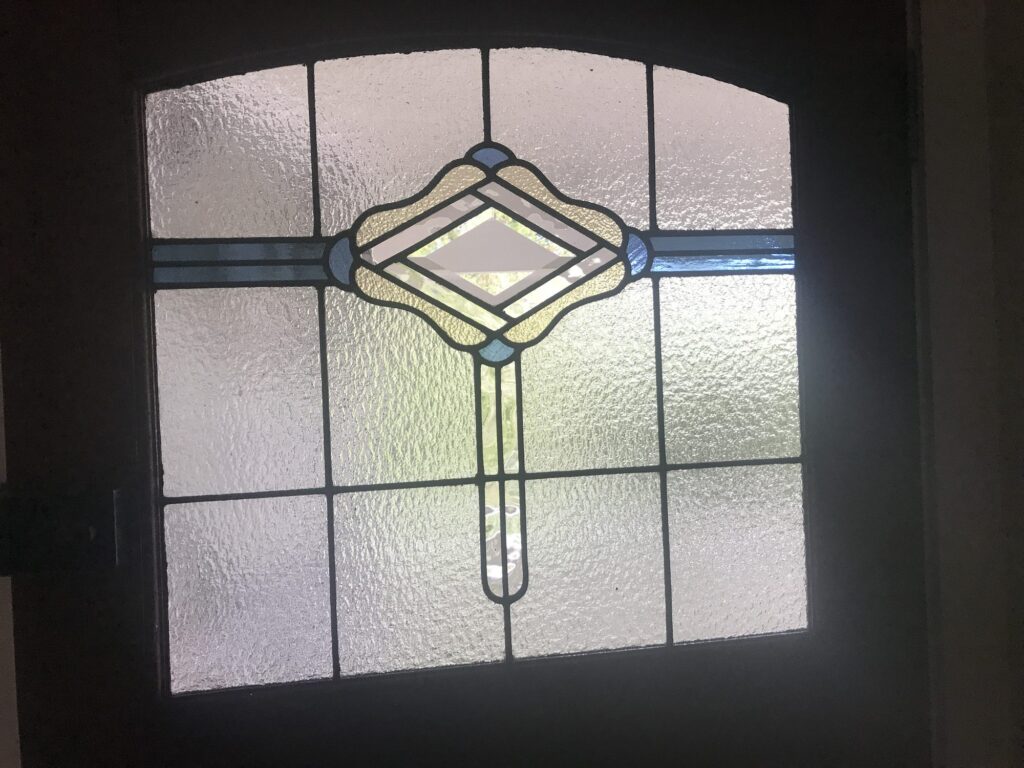
Art Deco leadlights rely heavily on texture. Clear textured glass, such as ribbed, reeded and hammered patterns, is common, often set off by small amounts of colour. Amber, honey, green and soft pastel tones are typical, and some panels include bevels that catch the light. Many Deco homes also feature sandblasted or etched glass alongside their leadlight.
Where you will find it
Deco leadlight appears in front doors and sidelights, the upper panes of casement and bay windows, hallway and living room doors, bathroom windows and built-in cabinetry, including buffet and china cabinet doors.
Repairing and restoring Art Deco leadlights
Interwar leadlight is now around 80 to 100 years old, which means many panels are reaching the point where the lead is worn. Signs include bowing, rattling glass and water getting in at the joints. A few broken pieces can usually be replaced on site, while worn-out lead calls for a full restoration in our Kew workshop.
The challenge with Deco glass is matching the texture. A replacement piece that is the right colour but the wrong pattern will stand out immediately. Because we have been collecting old leadlights and period glass for many years, there is a good chance we have the right ribbed, reeded or hammered glass to match your original.
During a restoration we record the design with a rubbing, temporarily glaze the opening, dismantle and clean the glass, then re-lead, solder, cement and polish the panel before reinstalling it.
Art Deco reproductions and new designs
Matching what you already have
If you are extending an interwar home, replacing a missing panel or restoring a door that has lost its original glass, we can make an exact reproduction of an existing leadlight. We use a rubbing of the original, match the glass as closely as possible and use similar lead widths, so the new panel sits comfortably beside the old.
Designing in the Deco style
We also design new Art Deco leadlights from our large collection of designs or your own ideas. A Deco panel works best when its proportions echo the rest of the house, so we consider the shape of the opening, the door or window style and the other period details in the room.
Safety and comfort
Where safety glass is required under AS 1288, such as in many doors and low windows, we can combine leadlight with suitable safety glass. Triple glazing is another option, adding clear panes to protect the leadlight while improving insulation and reducing noise.
Secondhand Art Deco leadlights
We buy and sell secondhand leadlights, including interwar panels. A good original Deco leadlight can be a lovely addition to a renovation, and old panels are also a valuable source of matching glass for repairs.
Frequently asked questions
Art Deco leadlight usually dates from the late 1920s to the 1940s and features geometric designs such as sunbursts, fans, stepped forms and chevrons, often in textured clear glass with amber, green or pastel accents. If you are unsure, we are happy to take a look.
In many cases, yes. We have collected old leadlights and period glass for many years, which gives us a good chance of matching ribbed, reeded or hammered patterns.
Yes. We can make an exact reproduction of an existing panel, or design a new Deco-style leadlight to suit different window sizes.
Yes. Front doors and sidelights are among the most common places for Deco leadlight. Where safety glass is required under AS 1288, we can combine leadlight with suitable safety glass.
We buy and sell secondhand leadlights, including interwar panels. Stock changes, so give us a call to ask what we currently have.
Related pages
- Leadlight restorations in Melbourne
- Leadlight and stained glass window reproductions
- Leadlight doors
- Federation leadlights, doors and windows
- Secondhand leadlights for sale in Melbourne
- On-site leadlight repairs in Melbourne
Talk to us about your Art Deco leadlights
For Art Deco leadlight repairs, restorations and reproductions in Melbourne and country Victoria, call Keith at Verity Leadlights on 03 9853 8611 or 0418 395 628. Our workshop is at 82 Derby Street, Kew VIC, and we have been working with period leadlight since 1979. We are highly rated by our customers, and we offer free, no-obligation quotes.