

Sometimes the right answer is a reproduction: a new leadlight made to match an original so closely that the two sit side by side without looking out of place. Verity Leadlights has made leadlight and stained glass window reproductions for Melbourne homes since 1979, in our workshop at 82 Derby Street, Kew.
When a reproduction makes sense
- An original panel has been lost, removed or replaced with plain glass in the past
- A renovation or extension adds new windows that should match the original house
- A panel is damaged beyond sensible repair
- A matching door, sidelight or highlight is needed to complete a set
- A house has been rebuilt and the owners want the character of the original back
- Owners in a heritage street want new work that respects the period
Reproduction is not a replacement for restoration. Where an original panel can be saved, we will usually recommend restoring it, because its glass and craftsmanship cannot truly be replaced. Reproduction is for gaps, additions and losses.
What makes a good reproduction
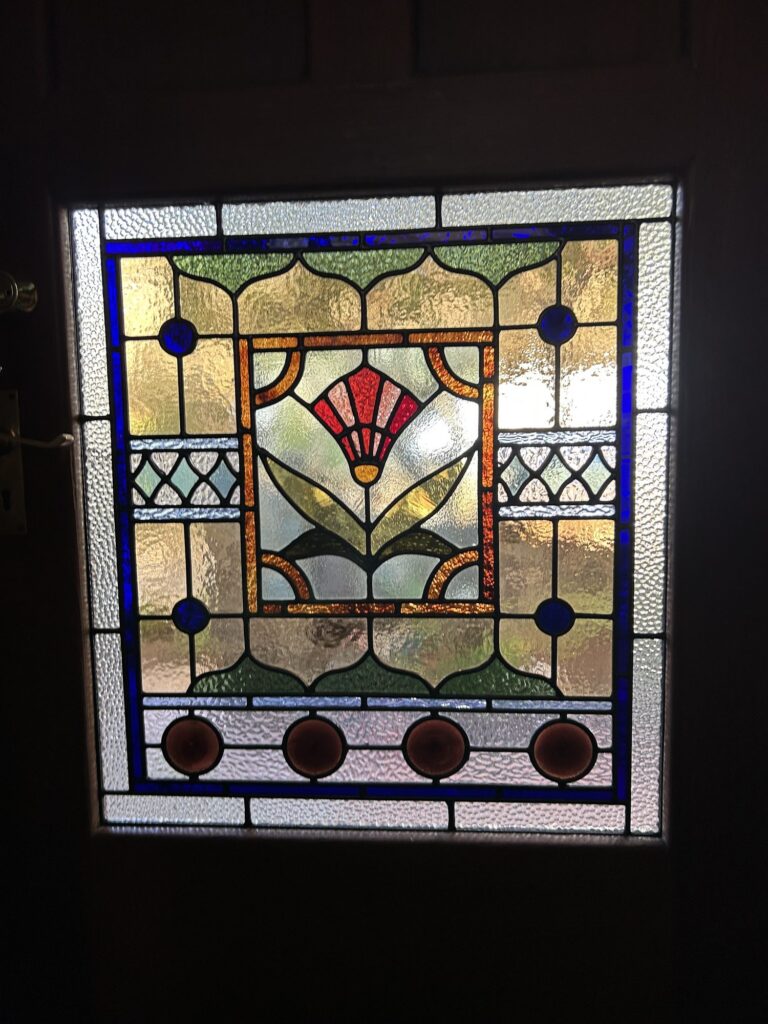
A reproduction succeeds or fails on details that are easy to overlook.
The design
We start by recording the original carefully, tracing it at full size where possible. Every lead line, curve and proportion is captured, rather than redrawn from memory. Where an original no longer exists, we can work from old pictures, from matching panels elsewhere in the house, or from similar houses of the same period in the street.
The glass
Glass is often the hardest part to match. Older glass has colours, textures and small irregularities that modern glass does not always reproduce. Since 1979, we have built up a large collection of old and antique glass from salvaged windows and old stock. For a reproduction that will sit next to an original, that collection is invaluable. Where no old glass matches, we choose the closest modern glass and check it against the original in daylight.
The lead
Lead profiles changed over the years, and period panels often used narrower or wider lead than people expect. Matching the width and profile of the lead is just as important as matching the glass, because heavy lead on a fine Victorian design makes it look clumsy.
Painted and fired detail
Some period windows include painted and fired detail, such as birds, flowers or borders. These need specialist painting, and we will tell you honestly what is possible for a particular window before you commit.
Leadlight and stained glass
People often use the terms interchangeably. Strictly speaking, leadlight is made from pieces of glass joined with lead, while stained glass usually also involves painted and kiln-fired detail. Most Melbourne homes have leadlight rather than painted stained glass, but both can be reproduced.
Reproductions for renovations and extensions
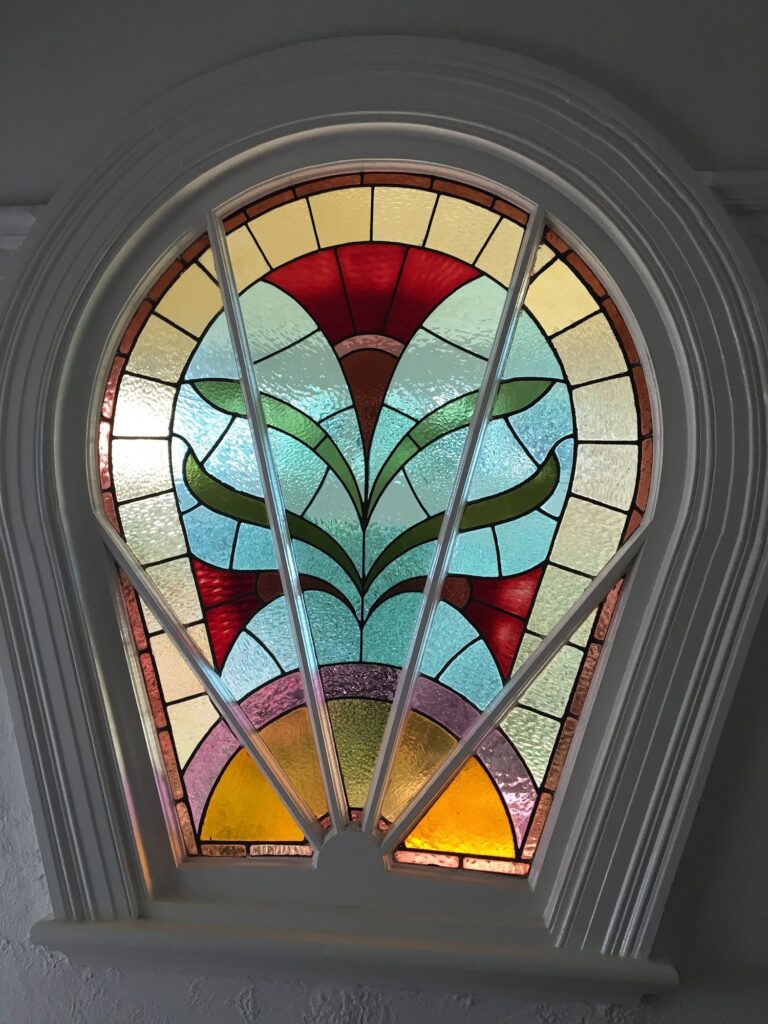
One of the most common reasons for a reproduction is a renovation. A Victorian or Edwardian house gains a new rear extension, or a bungalow gets a second storey, and the owners want the new windows to feel connected to the original house. We can reproduce an existing design exactly, or adapt it to new window sizes so the proportions still look right. Where the new window is in a location requiring safety glass under AS 1288, the reproduction can be combined with suitable safety glass, and we can also triple glaze it for insulation.
Completing a set
Period houses often had matching sets of leadlight: a front door with sidelights and a highlight, or a row of casement windows with the same pattern. If one panel has been lost, the set looks incomplete. Reproducing the missing panel restores the original effect of the entry or façade.
Heritage streets
In heritage overlay areas, councils may have views on changes to street-facing windows. Reproducing an original design is usually far more sympathetic than introducing a new style. If your home is in a heritage overlay, check with your council before changing street-facing windows.
Secondhand panels as an alternative
Sometimes a period-appropriate secondhand leadlight can fill a gap instead of a reproduction. We buy and sell secondhand leadlights, and an original panel of the right era can be resized or adapted to fit.
How the process works
We inspect and record the original, discuss glass choices with you, make the reproduction in our Kew workshop, then install it. Throughout, we compare the new work against the original so the match is as close as possible.
Ageing and patina
A brand-new panel next to a century-old one can look a little too crisp at first. Old lead darkens and old glass carries a soft patina. We finish reproductions so the lead has a dark, even tone that sits comfortably beside the original, and choosing old glass where possible helps the new panel blend in from the day it is installed.
Frequently asked questions
We record the original at full size and match its design, lead and glass as closely as possible, using old glass from our collection where we can.
We can work from old pictures, matching panels elsewhere in the house, or similar houses of the same period.
If the original can be saved, restoring it is usually best. Reproduction is for missing panels, extensions and damage beyond repair.
Yes. It can be combined with suitable safety glass to meet AS 1288.
Painted detail needs specialist work. We will tell you honestly what is possible for your window.
Related pages
- New leadlight windows in Melbourne
- Leadlight restorations in Melbourne
- Edwardian and Victorian leadlights in Melbourne
- Federation leadlights, doors and windows
- Art Deco leadlights in Melbourne
- Secondhand leadlights for sale in Melbourne
Talk to us about a reproduction
For leadlight and stained glass window reproductions in Melbourne, call Verity Leadlights on 03 9853 8611 or 0418 395 628, or visit our workshop at 82 Derby Street, Kew VIC. We have made leadlights since 1979 and are highly rated by our customers. Please ring before visiting, as we are often out on site.


