For many Melbourne homes, the leadlight in the front door is the first thing a visitor notices. It also works harder than any other leadlight in the house. Verity Leadlights has repaired, restored and made new leadlight for doors since 1979, from our workshop at 82 Derby Street, Kew.

Why door leadlight needs extra care
A leadlight window sits still in its frame. A leadlight door is opened and closed many times a day, sometimes slammed, sometimes caught by the wind. Each impact flexes the panel and stresses the lead joints. Over decades, that movement loosens the glass, fatigues the lead and wears out the cement that seals the panel. That is why door panels are among the most common leadlight repairs we see.
Signs your door leadlight needs attention
- The glass rattles when the door closes
- The panel bulges or bows outwards or inwards
- Cracks appear in individual pieces
- Light shows through gaps between the glass and the lead
- Water gets in around the panel during driving rain
- Joints in the lead are cracked or broken
Repairing a leadlight door
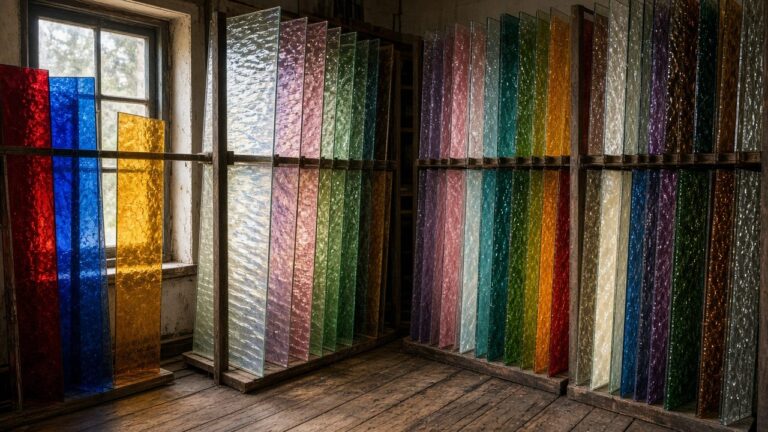
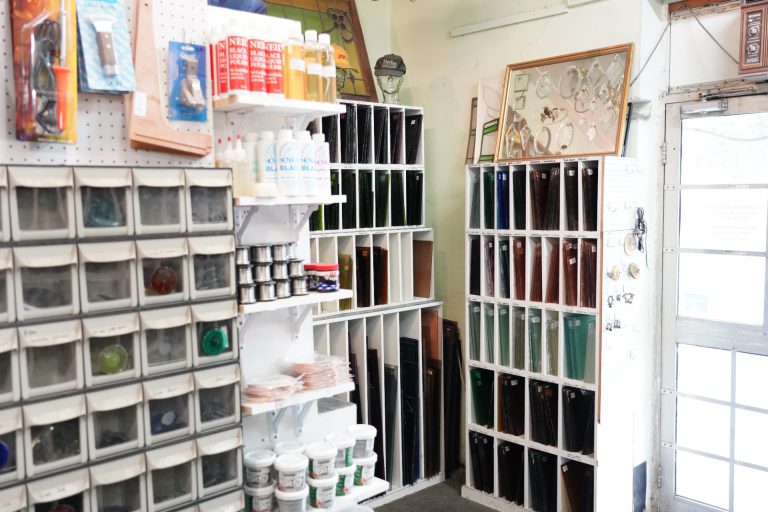
If the panel is generally sound and only a few pieces are broken, we can often repair it with the leadlight left in the door. The lead is opened around the broken piece, new glass is cut to match and set in place, and the lead is closed and re-soldered. Our large collection of old glass, gathered since 1979, helps us match period colours and textures.
Restoring a leadlight door
When a door panel is bowing, rattling throughout or has many broken pieces, restoration is the lasting answer. We record the design, remove the panel and temporarily glaze the door so the house stays secure. In our workshop, the leadlight is dismantled, the original glass is cleaned and kept, and the panel is rebuilt with new lead, fresh solder and cement. It goes back into the door strong and weathertight. For larger door panels, it is worth discussing whether extra support is needed when the panel is rebuilt.
New leadlight doors
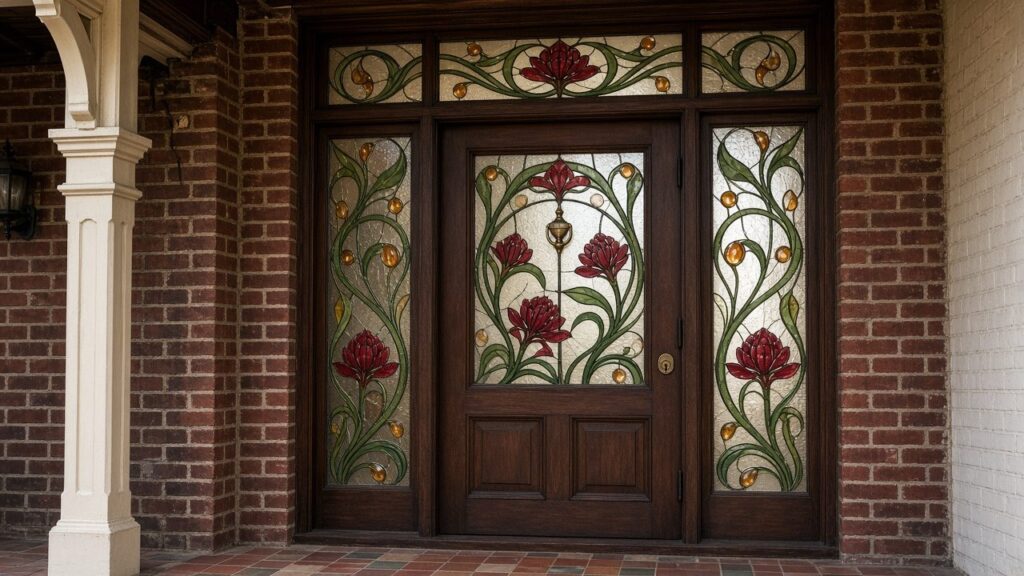
We design and make new leadlight for front doors, sidelights and highlights, as well as internal doors between rooms. A new entry is often designed as a set, so the door, sidelights and highlight work together. We can reproduce a period design to suit an older home, or create something contemporary for a new one.
Safety glass and AS 1288
Glass in doors and sidelights is one of the main areas covered by Australian Standard AS 1288, which sets out where safety glass is required. New leadlight in these locations can be combined with suitable safety glass, for example as part of a triple-glazed unit. This allows you to keep the look of leadlight while meeting the standard. We can advise on what applies to your door.
Triple glazing for doors
Triple glazing a leadlight door places the leadlight between layers of clear glass. This protects the leadlight from knocks and weather, and improves insulation and noise reduction. It is a good option for front doors that face busy streets or take the brunt of the weather.
Door styles across the eras

Victorian
Victorian doors often have leadlight in upper panels, with coloured margins around clear or etched centres, and matching sidelights and highlights.
Federation and Edwardian
Federation doors are known for flowing Art Nouveau designs, Australian flora and rich opalescent glass, often with a large central panel.
Interwar and Art Deco
Bungalow doors usually have simpler geometric leadlight in textured glass. Art Deco doors feature stepped shapes, sunbursts and strong vertical lines.
Looking after your leadlight door
- Fit a door stop or closer so the door does not slam
- Clean the glass with mild soapy water and a soft cloth
- Avoid high-pressure hoses and abrasive cleaners
- Check the door is hanging properly; a sagging door strains the glass
- Call early if you notice rattling or a new crack
When the door itself is the problem
Sometimes the leadlight is fine but the door has sagged, warped or loosened at its joints. A door that binds or drops as it closes twists the panel each time it is used, and a repair will not last until the door is fixed. When we inspect, we look at the door as well as the glass, and will let you know if a carpenter’s attention would help.
Original doors in heritage homes
In many period homes, the original front door is one of the most important surviving features. Restoring the original leadlight keeps that character intact. If your home is in a heritage overlay, check with your council before changing a street-facing door.
Frequently asked questions
Often, yes. If the panel is sound, broken pieces can usually be replaced with the leadlight left in the door.
Rattling usually means the cement sealing the panel has worn out or the lead has fatigued. The panel may need re-cementing or restoration.
Yes. Leadlight can be combined with suitable safety glass to meet AS 1288.
Yes. We design new entries as a set, or reproduce a period design to match your home.
We temporarily glaze the door so your home stays secure and weatherproof.
Related pages
- On-site leadlight repairs in Melbourne
- Leadlight restorations in Melbourne
- New leadlight windows in Melbourne
- Leadlight and stained glass window reproductions
- Triple glazing of leadlight and stained glass windows
- Federation leadlights, doors and windows
Talk to us about your leadlight door
For leadlight doors in Melbourne and country Victoria, call Verity Leadlights on 03 9853 8611 or 0418 395 628, or visit our workshop at 82 Derby Street, Kew VIC. We have worked on leadlight doors since 1979 and are highly rated by our customers. Please ring before visiting, as we are often out on site.